How to Start a Campus Ambassador Program: A Step-by-Step Guide
Learn how to launch a campus ambassador program, from student recruitment and incentives to content assignments and performance tracking, with a real example from Korea.
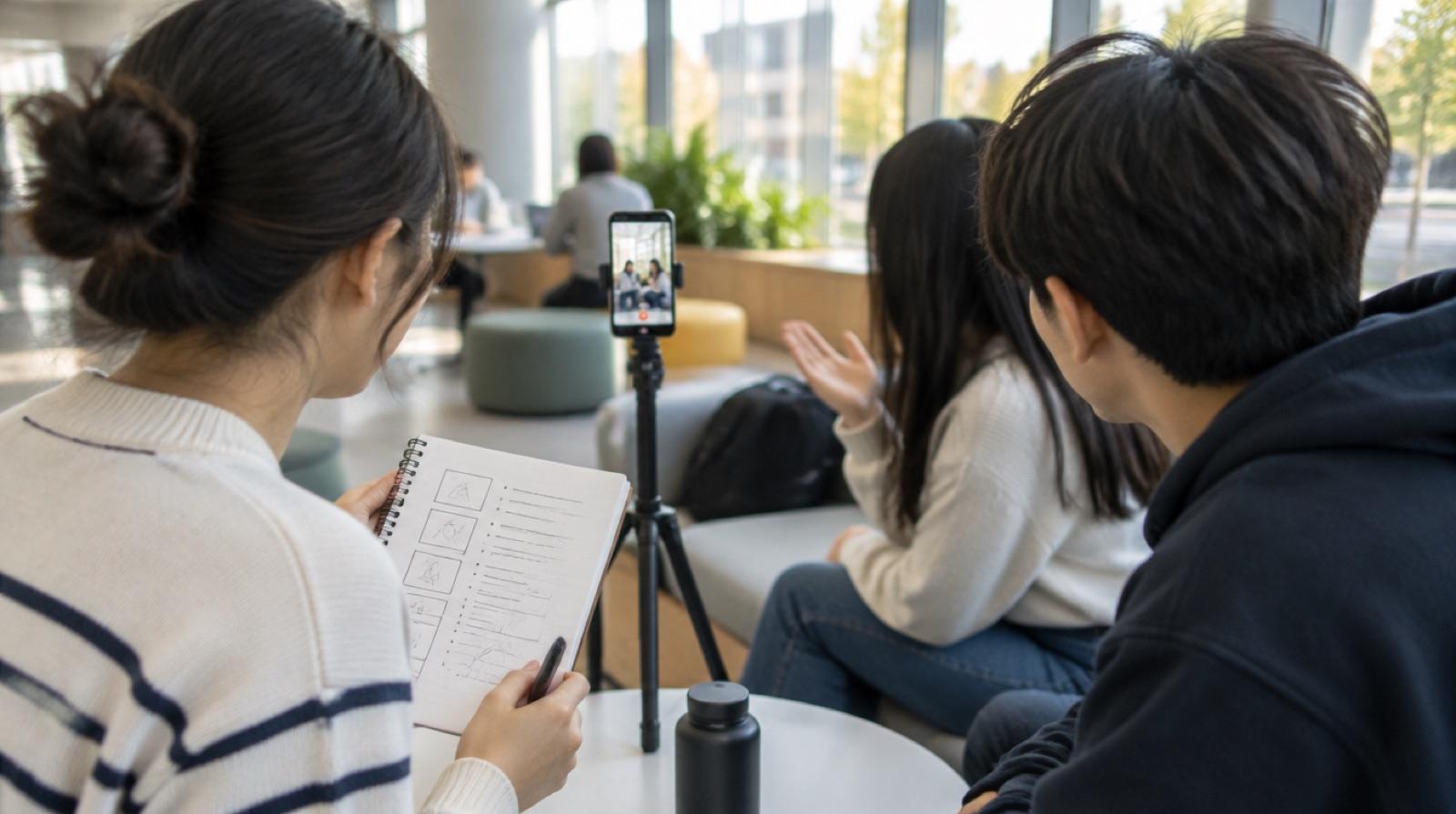
Key takeaways
- Start with your content goals, then determine the size of your program. Define your program's goal, then use it to determine how many participants you need, how long the program should run, and what assignments to give them.
- Recruit for consistency, not follower count. Students who already post regularly and are active on campus tend to finish the program. A sample video tells you more than a follower count.
- Set the rules and the review process before kickoff. Deadlines, review before posting, ad disclosure, and usage rights are easier to agree on before anyone starts.
Most search results for "campus ambassador program" are lists of programs for students to apply to. This guide is for brand teams looking to launch their own campus ambassador programs.
A campus ambassador program recruits students to create content and represent a brand over several months, usually with a stipend, products, and in-person events. Unlike a one-off influencer campaign, it involves ongoing participation, regular assignments, and a longer-term relationship with the brand. Below are the decisions to make before launch, in order. We use a university ambassador program our founder ran in Korea as the example, and we explain what changes when you run one there.
How to start a campus ambassador program, step by step
- Set one main goal. Pick the main thing the program should produce. Common goals are short-form videos you can reuse as ads, steady posting around a launch, sign-ups or app installs from students, and visibility on specific campuses. One main goal makes every later decision easier, from who you recruit to what you measure.
- Decide who to recruit. Write down who the ideal ambassador is before you open applications. Do you need students in a certain major, at certain schools, or on a certain platform? Followers matter less than you might expect. Students who already post every week, or who are active in clubs and student groups, are more likely to keep going for several months.
- Choose the size and length. Work backward from your content goal. Participants × assignments per month × months gives you the planned output. For example, if 25 participants each post twice a month for four months, your target output is 200 videos. We typically recommend running a program for at least four months to give participants time to apply feedback and improve their content.
- Design the assignments. Set a fixed number of assignments per month and vary the assignment types. Individual assignments let ambassadors use the format that already works on their channel. Campaign-specific assignments tie content to your launches and events. Team assignments let small groups plan bigger pieces or campus activations. Create a brief for each assignment outlining the key message, required content elements, and any restrictions.
- Pick the incentives. Many programs combine a monthly stipend with things that cost the brand little but matter to students: products, a certificate of completion, professional headshots, opportunities to connect with your team, and awards for top-performing ambassadors. Decide in advance how awards are judged, so ambassadors know what counts.
- Plan the in-person events. Plan at least a kickoff, a mid-program meetup, and a closing event. The kickoff explains the brand and the rules. Use the mid-program meetup to review which content performed well and refine your briefs. The closing event gives awards and ends the program on a clear date.
- Set the rules and the review process. Before kickoff, share deadlines, how many revision rounds there are, what happens after repeated missed deadlines, how posts must disclose the partnership, and where and for how long the brand can reuse the content. Then review every script or video before it goes live.
- Decide how you'll measure it. Track each post's views, saves, comments, and shares. Track each ambassador's on-time submission rate, content quality, and initiative. If your goal is sign-ups or installs, give each ambassador a code or link. At the mid-program meetup and at the end, compare formats and hooks, not only totals. The best-performing videos are often the ones worth reusing as ads.
Program design at a glance
| Decision | Questions to answer | FAVO's typical approach |
|---|---|---|
| Goal | Ad creatives, launch posts, sign-ups, or campus visibility? | One main goal per program |
| Target participants | Which schools, majors, and platforms? Posting consistency or follower count? | Prioritize sample videos and interviews over follower count |
| Size | How many videos do you need in total? | 20–30 participants |
| Length | Is there time to improve after the first feedback? | A minimum four-month program |
| Assignments | How many a month, and which types? | Two assignments per month, combining individual, campaign-specific, and team assignments |
| Incentives | What will keep participants engaged throughout the program? | Monthly stipend plus products, kits, and awards |
| Events | When will the group meet in person? | Kickoff, mid-program meetup, closing event |
| Review | Who checks content before it goes live? | Every script or video, before posting |
| Measurement | What will you compare at the midpoint and the end? | Per-post and per-participant results, monthly reporting |
Example: a university ambassador program in Korea
Before founding FAVO, our founder led three cohorts of a university ambassador program at Team Sparta, a Korean tech education company. One four-month cohort produced 108 videos, with the most-viewed video reaching 94,000 views. The program was developed and managed in-house at Team Sparta.
| Step | What the program did |
|---|---|
| Goal | Short-form videos from university students on their own channels |
| Target participants | University students in Korea |
| Length | Four months for the first cohort |
| Assignments | Two short-form videos a month, with individual and team assignments |
| Events | Kickoff, mid-program meetup, and closing event |
What's different when you run it in Korea
These steps provide a starting point for most markets. In Korea, a few things change.
- Students already know the format. Ambassador programs are a familiar extracurricular activity for Korean university students, so the role needs little explanation. The challenge is maintaining consistent content quality throughout the program.
- Plan around the academic calendar. The academic year at Korean universities starts in March, with a second semester from September. Midterms and finals are busy weeks, so lighter assignments or later deadlines help around them.
- Plan for Korean-language operations. Recruitment posts, briefs, script review, and feedback need a Korean-speaking team, and in-person events need people on the ground.
- Ad disclosure and payment paperwork. Paid posts in Korea need a clear ad disclosure, and stipends paid to students in Korea come with local tax paperwork. Decide early who handles both.
- Short-form video is a common content format. In our programs, assignments were short-form videos on participants' own channels.
For recruiting, screening, and month-by-month management in Korea, see How to Run a Brand Ambassador Program in Korea.
FAQ
What is a campus ambassador program?
A program where a brand recruits students to create content and represent it on campus and on social media over several months, usually with a stipend, products, and in-person events.
How many campus ambassadors should we recruit?
Start with your target content output: participants × assignments per month × months. FAVO's ambassador programs usually have 20–30 participants. Consider recruiting a few extra participants to account for potential dropouts.
How long should a student ambassador program last?
Long enough for participants to improve after feedback. FAVO's programs run at least four months, with about six to eight weeks of planning and recruitment before kickoff.
Are campus ambassadors typically paid?
Compensation can include a monthly stipend, products, welcome kits, and performance-based awards. The total depends on the number of participants, the length, and the number of in-person events.
Can an international brand run a campus ambassador program in Korea?
Yes. You need a Korean-speaking team for recruitment, briefs, and content review, on-site staff for in-person events, and a way to pay participants in Korea. FAVO handles these and reports to you in English.
Sources
- Team Sparta university ambassador program data (cohorts 1–3, led in-house by FAVO's founder)