UGC in Korea: How to Recruit and Train UGC Creators (2026)
Learn where to find UGC creators in Korea, what to include in your recruitment post, and how to train creators for a daily video campaign.
Key takeaways
- Recruit through an ambassador-style program. Tell applicants what they'll make, how often they'll post, how much they'll earn, and whose account they'll use.
- Train creators weekly during the first month. Cover opening hooks, repeatable video formats, and ad disclosure. Use examples from creators' own videos once they start posting.
- Build expected drop-off into your recruitment target. If you need 10 active creators and budget for 30% attrition, plan to onboard 15.
UGC is still new in Korea. A UGC job post written the way it would be in the US or Europe may get few applicants here.
If you're recruiting creators in Korea to make short-form videos for your brand, start with a role they can picture. An ambassador-style recruitment post can spell out what creators will make, how often they'll post, what they'll earn, and what training they'll receive.
This guide covers how we recruit, screen, and train creators for UGC campaigns in Korea. Every brand and app is different, so treat it as a starting point.
How to describe a UGC role in Korea
In our recruiting, most applicants hadn't made brand UGC before. So we recruit through ambassador and supporters formats they already know, then train them.
In this guide, UGC means short-form content commissioned by a brand and made by creators. Depending on the campaign, the videos can appear on creator accounts, brand-owned accounts, or in paid ads.
Korean students already know several brand-run program formats and often list them on their résumés as extracurricular activities (대외활동). Naming your role after one of these formats makes the recruitment post easier to understand.
| Format | What participants usually expect | How it can work for UGC |
|---|---|---|
| Supporters (서포터즈) | Use a product for a few weeks and post reviews on their own accounts | Short campaigns with a set number of posts per person |
| Ambassador (앰배서더) | A longer program with regular assignments and, often, in-person events | Recruiting students who post on a fixed schedule over one or more months |
| Product testers (체험단) | Receive a product and post a review, often on Naver Blog | Review content rather than ad-style videos |
Two things to state separately in the post: which account the videos go on (the creator's own account or a brand-owned account), and whether creators need to appear on camera. For app demos, you can allow screen recordings or hands-only footage.
What to include in the recruitment post
Applicants decide quickly from the title and the pay. These are the points we put up front:
- Base pay, any performance bonus, and when creators get paid. If pay depends on completing the month, state the number of required posts and how partial months are paid.
- How often to post. Say exactly how many videos per week, and how many of them are required.
- Whether creators need to appear on camera. For app demos, you can allow screen recordings or hands-only footage.
- Whose account the videos go on. The creator's own account, a new account they create, or a brand-owned account.
- What happens if someone stops halfway. State the rule in the post, not after selection.
Train creators weekly in the first month
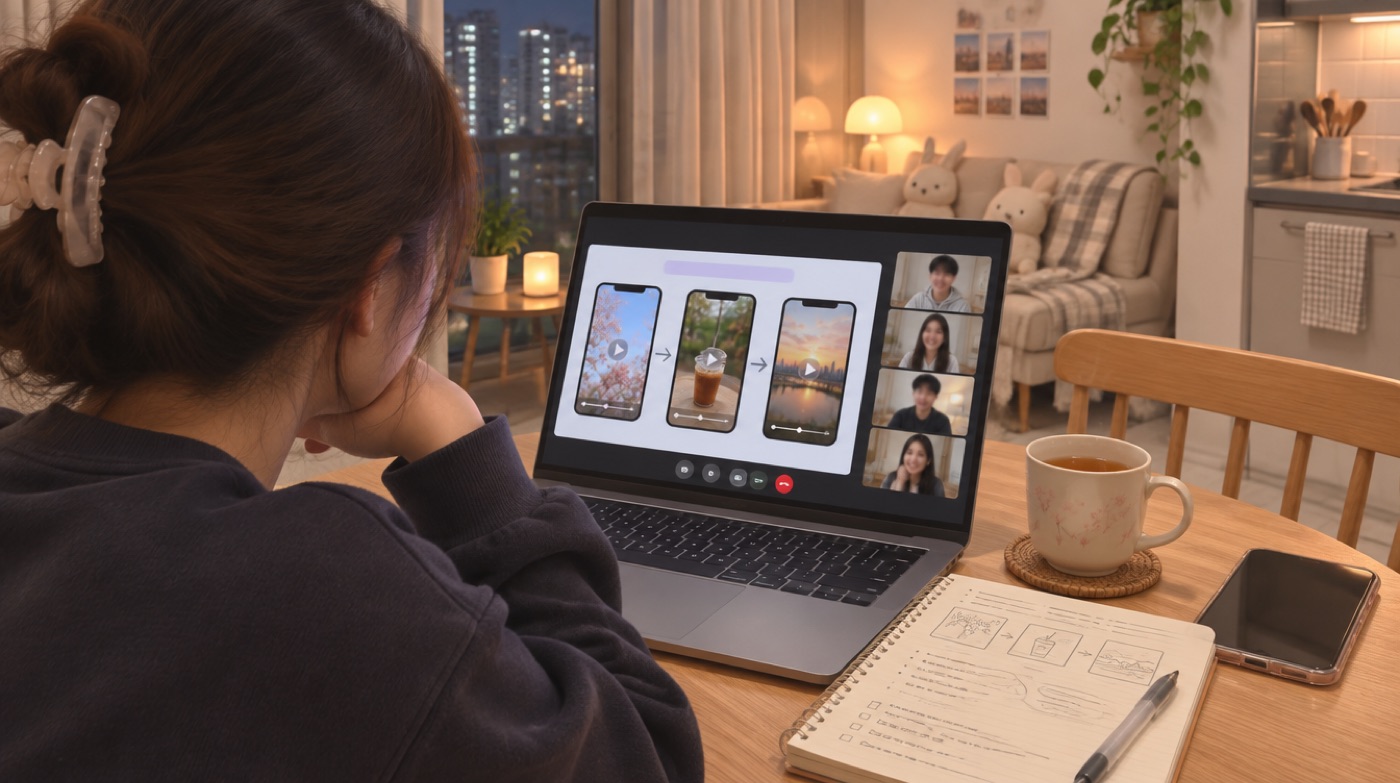
A brief and a few example videos are usually not enough for new student creators. We run a short weekly session in the first month and cover:
- Opening hooks: the first two seconds, with examples that worked for the product.
- Repeatable formats: a feature demo, a before-and-after, a routine, a reaction.
- Last week's videos: we review them together and discuss which hooks and formats performed best.
- Ad disclosure: how to label each post under Korean rules.
Expect the first two weeks to be slower. Output and quality usually improve once creators see which of their own videos performed.
Plan for drop-off
Some creators will stop posting, especially in daily-posting programs. Recruit more people than the number you want to keep, and start all of them at once rather than keeping a waiting list. People on a waiting list with nothing to do tend to drop out too.
| Program | Length | Drop-off | Type |
|---|---|---|---|
| University ambassador program (Team Sparta, run in-house by our founder) | 4 months, 20 participants | 2–3 people (10–15%) | Measured |
| PeeRZ creator community | Cohorts 1–4, Mar–Oct 2026 (average) | About 23% | Measured |
| Daily-posting UGC program | 1 month | 30% | Planning assumption |
With a 30% assumption, keeping 10 active creators means onboarding 15 (10 ÷ 0.7 = 14.3, rounded up).
Ad disclosure in Korea
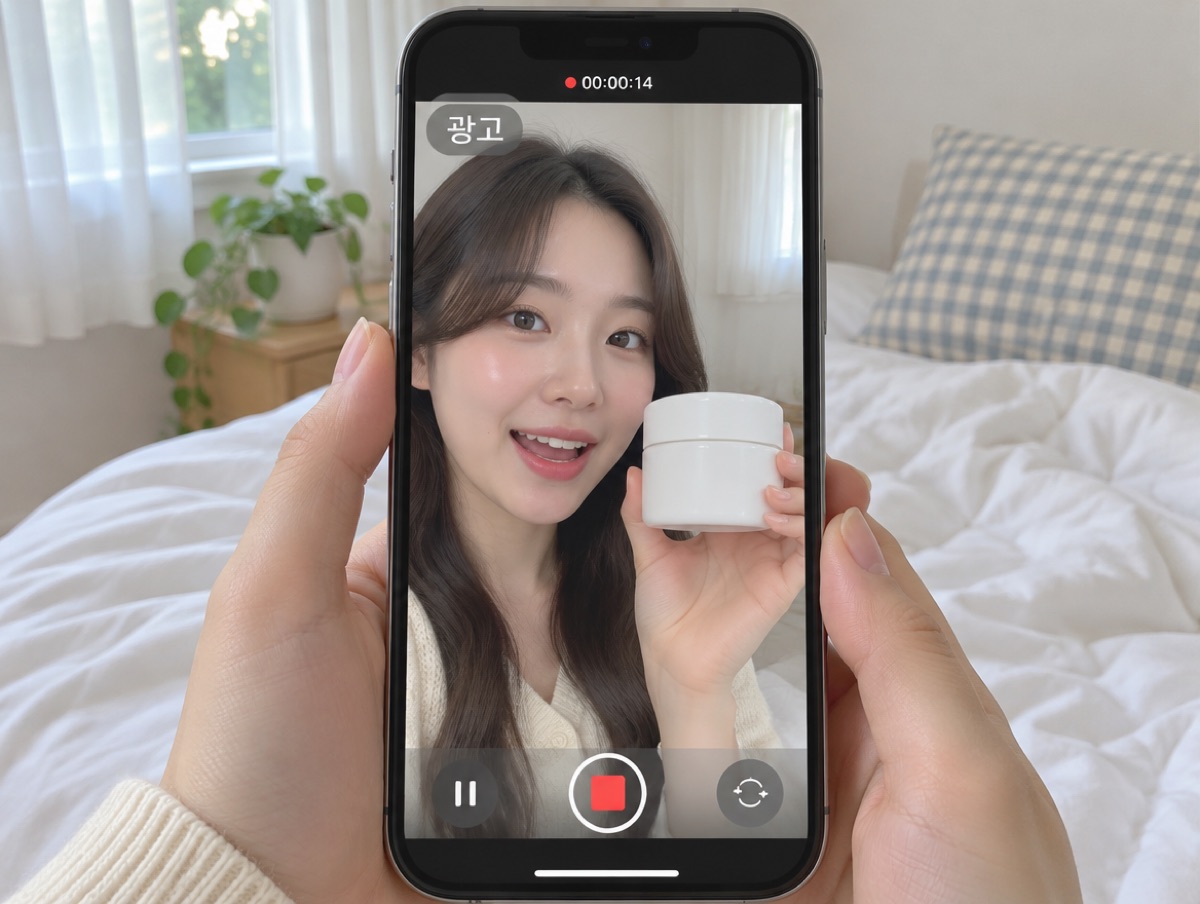
Under the Korea Fair Trade Commission's endorsement guidelines, creators who receive payment, free products, or other benefits must disclose that relationship clearly, in Korean wording that matches what they received, such as 광고 (ad) or 제품 제공 (product provided).
| Format | Where the label goes |
|---|---|
| Video, whole video is an endorsement | At the start and end of the video, and repeated during it |
| Video, only part is an endorsement | At the start and end of that part, and repeated while it runs |
| Blog and other text posts | In the title or the opening of the post (since December 2024) |
| AI-generated virtual people | A label such as 가상인물 near the virtual person while it appears (since June 2026) |
Some cases are less clear-cut, so check them before you publish:
- Brand-owned accounts. When a creator posts on an account that clearly belongs to the brand, the relationship may already be obvious. If the video presents the creator as an ordinary user recommending the product, adding a label is the safer choice.
- Short-form videos. A 15-second Reel has little room for a separate start and end. Many creators keep a label on screen for the whole video instead.
- Product-only reviews. A free product still counts as a benefit, so a review of a gifted product needs a label such as 제품 제공.
- Reusing creator content in paid ads. Once a brand runs the content as an ad, the ad itself has to be identifiable as an ad, separately from the creator's original post.
Guidelines are revised from time to time, so we check every post against the current version before it goes live.
Which creator program fits your campaign?
In FAVO's programs, the schedule and deliverables depend on your goal. A typical setup looks like this:
| Daily UGC Program | University Ambassador Program | Supporters Program (Product Reviews) | |
|---|---|---|---|
| Best for | Apps and products that need many ad creatives | Building presence with a group over months | Reviews around a launch |
| Posting | Daily, on creator or brand-owned accounts | Two assignments a month on own accounts | Two posts over 2–4 weeks on own accounts |
| Length | Monthly | 4+ months | 2–4 weeks |
| In-person events | No | Kickoff, meetup, closing event | No |
| Training | Weekly in the first month | Monthly guides and meetups | Posting guide |
If you need a steady flow of ad creatives, a daily UGC program with training built in is the right tool. If your goal is reviews around a launch, or a group of people talking about your brand over a semester, a supporters or ambassador program can be easier to fill.
FAQ
Can I run a UGC campaign in Korea?
Yes. For student campaigns, we recruit through a university ambassador-style program and train creators on the short-form videos they'll make.
Do Korean UGC creators need followers?
For campaigns focused on producing video assets, we prioritize a short video sample. If the campaign also depends on reach from creators' own accounts, we consider audience fit and reach.
How long does it take to start a UGC campaign in Korea?
For a small student UGC pilot, allow roughly two to three weeks from recruitment to the first posts. Timing depends on the number of creators and the training required.
Do UGC videos need an ad label in Korea?
Yes. When creators receive payment, free products, or other benefits, the relationship should be disclosed clearly, for example with 광고 or 제품 제공. In videos, the label goes at the start and end and is repeated during the video. Check the current Korea Fair Trade Commission guidelines for the post format.
Sources
- Korea Fair Trade Commission, Guidelines on the Review of Endorsement and Testimonial Advertising (추천 · 보증 등에 관한 표시 · 광고 심사지침), National Law Information Center
- Korea Fair Trade Commission, revision of the endorsement guidelines (press release)
- Easy Law (Ministry of Government Legislation), how to disclose economic relationships in video ads
- FAVO program data: Team Sparta university ambassador program (run in-house by our founder) and PeeRZ creator community